

What Does a Turnkey Edible Oil Refinery Project Include?
Jan 22, 2026
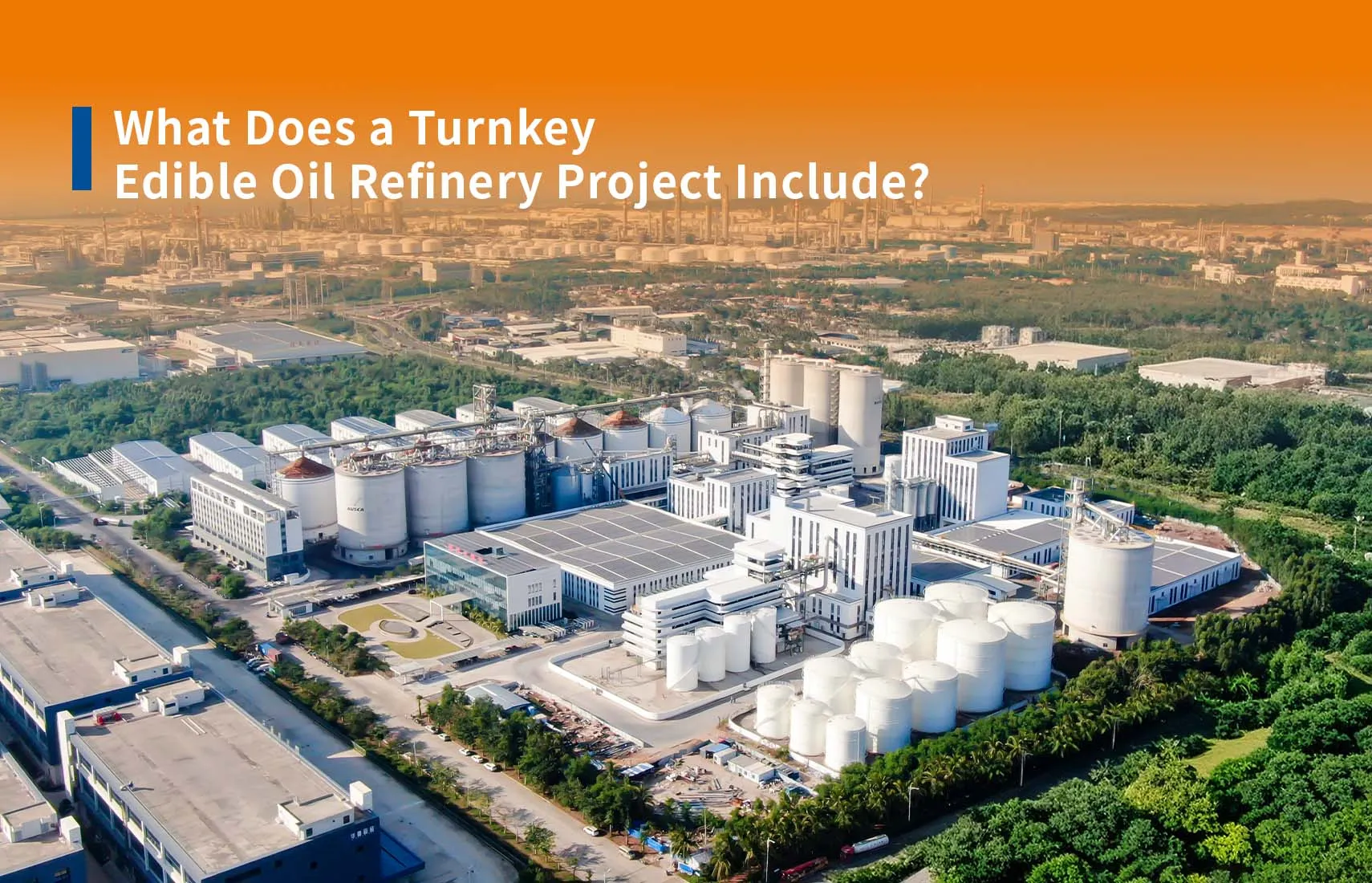
A turnkey edible oil refinery project includes the complete delivery of a refinery plant, covering process design, equipment manufacturing, automation, installation supervision, commissioning, training, and start-up support—handled by one accountable supplier.
Unlike equipment-only supply, turnkey delivery ensures that all systems are fully integrated and the refinery operates as designed, reducing technical, schedule, and coordination risks for investors.
Why Turnkey Matters in Edible Oil Refinery Projects
Edible oil refining is a process-intensive industry where product quality, oil yield, and energy consumption depend on how well individual systems work together.
When multiple vendors are involved, common risks include:
🔸Process mismatch between units
🔸Delays caused by unclear responsibilities
🔸Higher oil loss and energy consumption
🔸Difficult commissioning and unstable operation
Turnkey projects address these challenges by assigning single-point responsibility for the entire refinery.
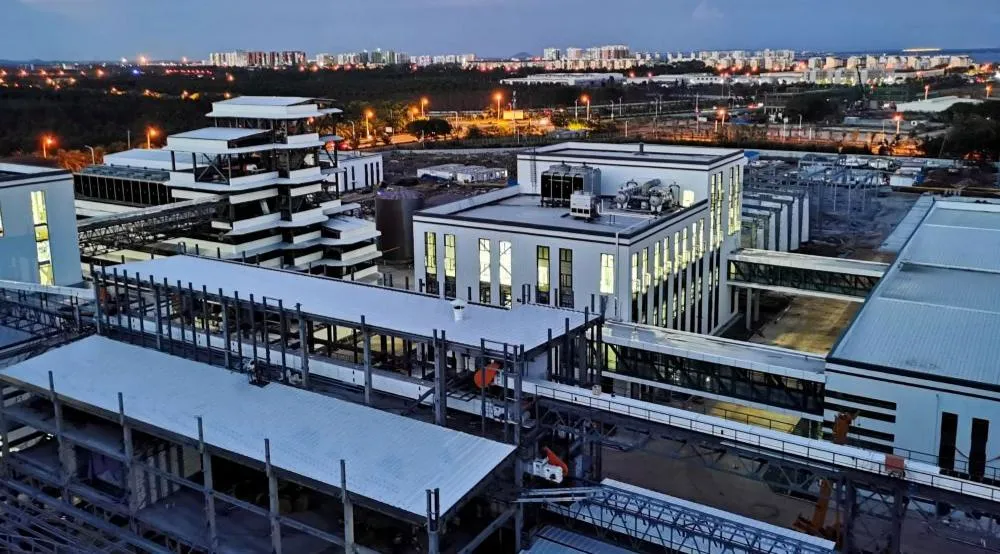
Core Components of a Turnkey Edible Oil Refinery Project
1. Process Design & Technology Selection
This is the foundation of any successful refinery project.
Turnkey suppliers are responsible for:
🔸Selecting suitable refining routes (physical or chemical refining)
🔸Designing process flow based on oil type and capacity
🔸Optimizing oil yield, energy consumption, and product quality
🔸Developing overall plant layout and process integration
Good process design directly determines long-term profitability, not just initial investment.
2. Equipment Manufacturing & System Integration
Turnkey scope includes all major refinery systems, such as:
🔸Degumming and neutralization units
🔸Bleaching and filtration systems
🔸Deodorization and heat recovery systems
🔸Vacuum systems and utilities integration
Equipment is designed as part of a system, not as standalone machines, ensuring smooth operation and consistent performance.
3. Automation & Control Systems
Modern edible oil refineries rely heavily on automation.
A turnkey project typically covers:
🔸PLC / DCS system design
🔸Process logic and control strategy development
🔸Instrumentation and field device integration
🔸Centralized monitoring and operation
Automation improves:
🔸Product consistency
🔸Oil loss control
🔸Energy efficiency
🔸Food safety and traceability
4. Installation Supervision & Site Coordination
In turnkey delivery, the supplier supports:
🔸Installation supervision and technical guidance
🔸Coordination with civil works and utilities
🔸Equipment alignment and system checks
This ensures that the plant is built according to design intent, not just assembled on site.
5. Commissioning & Performance Testing
Commissioning is where turnkey value becomes most visible.
Typical scope includes:
🔸Cold and hot commissioning
🔸Process parameter tuning
🔸Performance testing and acceptance
🔸Troubleshooting during start-up
The goal is not just to “run the plant,” but to achieve stable, continuous, and qualified production.
6. Operator Training & Start-Up Support
A refinery performs only as well as its operators.
Turnkey suppliers provide:
🔸Operator and maintenance training
🔸Process operation manuals and SOPs
🔸On-site start-up support
This helps customers reach designed capacity and quality faster.
7. After-Sales & Lifecycle Support
Long-term support is a critical part of turnkey projects.
This may include:
🔸Technical troubleshooting
🔸Process optimization support
🔸Spare parts planning
🔸Future capacity expansion consulting
Lifecycle support protects the customer’s investment beyond initial start-up.
Turnkey vs Equipment-Only Supply: Key Differences
|
Aspect |
Turnkey Project |
Equipment-Only Supply |
|
Responsibility |
Single-point |
Multiple vendors |
|
Process integration |
Fully integrated |
Limited |
|
Commissioning |
Supplier-led |
Customer-led |
|
Project risk |
Lower |
Higher |
|
Long-term performance |
Optimized |
Uncertain |
Industry Insight: How Leading Turnkey Suppliers Operate
Experienced turnkey suppliers treat edible oil refineries as long-term operating assets, not short-term equipment sales.
In practice, companies like Myande Group, with extensive experience in edible oil processing and global turnkey project delivery, typically focus on:
🔸Full-process engineering and optimization
🔸High automation and system integration
🔸Stable long-term operation and energy efficiency
This engineering-driven approach is why large investors and industrial groups increasingly prefer turnkey refinery solutions.
Frequently Asked Questions
| 🔸Does turnkey mean one fixed design for all projects? No. Turnkey projects are customized based on oil type, capacity, local conditions, and customer requirements. |
| 🔸Is turnkey suitable for small edible oil refineries? Turnkey delivery is most beneficial for medium and large-scale projects, where integration and risk control are critical. |
| 🔸Does turnkey reduce total project cost? While initial investment may be higher than equipment-only supply, turnkey projects often achieve lower total cost of ownership through better efficiency and stable operation. |
A turnkey edible oil refinery project includes everything required to deliver a fully operational refinery, from process design to long-term support.
For investors seeking predictable performance, reduced risk, and sustainable profitability, turnkey delivery is the most reliable approach—especially when partnering with experienced, engineering-driven suppliers.

Recent Posts

October 26, 2016
The Most Successful Engineering Contractor




Contact Us
Product Information
Quantity
Unit
Piece
Support order samples, customization, wholesale direct, and complete payment. If the product you look for does not have corresponding customized content, pls fill out the form below to contact us, and we will reply ASAP.