

How Soybean Oil Preparation Works: Step-by-Step Guide from Cleaning to Flaking?
Mar 17, 2026

When I first started working with soybean oil processing systems, one thing became very clear to me: the quality of your final oil is decided long before extraction even begins. It all starts with how you prepare the soybeans.
In this guide, I’ll walk you through the soybean preparation process the way I usually explain it to plant operators and clients—step by step, in a practical, hands-on way.
Understanding Soybean Preparation (Before We Begin)
Before we even talk about machines, I always remind people of this:
Soybean preparation is not just a “pre-step”—it is the foundation of oil yield, efficiency, and equipment stability.
When soybeans are properly prepared, you immediately see:
🔸Higher oil extraction efficiency
🔸Smoother solvent or pressing performance
🔸Less wear and blockage in downstream systems
In most modern plants, we prepare soybeans through a sequence of cleaning, conditioning, cracking, dehulling, flaking, and sometimes expanding. Each step plays a very specific role.

Step 1: Conditioning
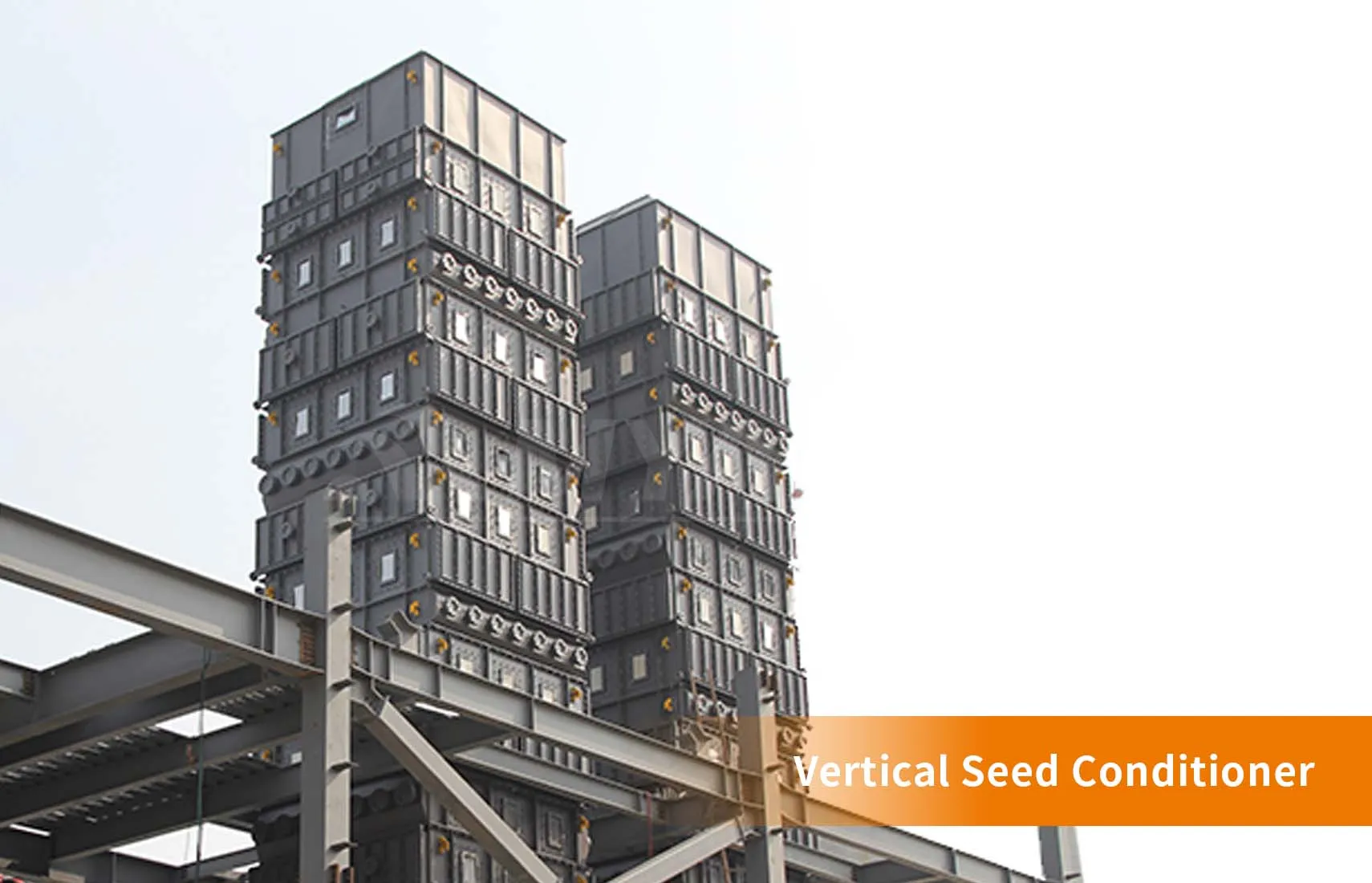
This is where everything begins in the plant flow.
Conditioning—this is where soybeans really start to “wake up.”
Inside the conditioner, the beans go through:
🔸Controlled feeding
🔸Gentle steam heating
🔸Air circulation for moisture balance
🔸Discharge once temperature and moisture are uniform
What we’re really doing here is simple:
We’re softening the beans, adjusting moisture, and making them easier to crack and flake later.
Step 2: Cracking

Once conditioning is complete, I move the beans into cracking.
The goal here is not to pulverize the beans—but to break them just enough to release the hulls.
First cracking stage
We use corrugated rollers to break the beans into 2–4 pieces. At this point, a large portion of hulls already starts separating.
Then the mixture goes through an aspirator, where airflow removes the loosened hulls.
Second cracking stage
We crack the remaining pieces further into 4–8 smaller fragments.
Another air separation step removes the rest of the hulls.
By the end of this stage, what we get is a much cleaner kernel base ready for dehulling and flaking.
Step 3: Dehulling
Dehulling is one of the steps I pay close attention to, especially when the goal is high oil yield and high-quality meal.
First dehulling stage
After initial cracking, beans still contain some hulls. In the first aspirator, most of the hulls are removed using controlled airflow.
Second dehulling stage
Any remaining hulls are separated in a second aspirator.
What you end up with is clean soybean kernels.
Sometimes, hulls are also ground and reintroduced into soybean meal depending on protein targets—which gives flexibility to the final product specifications.
Step 4: Flaking
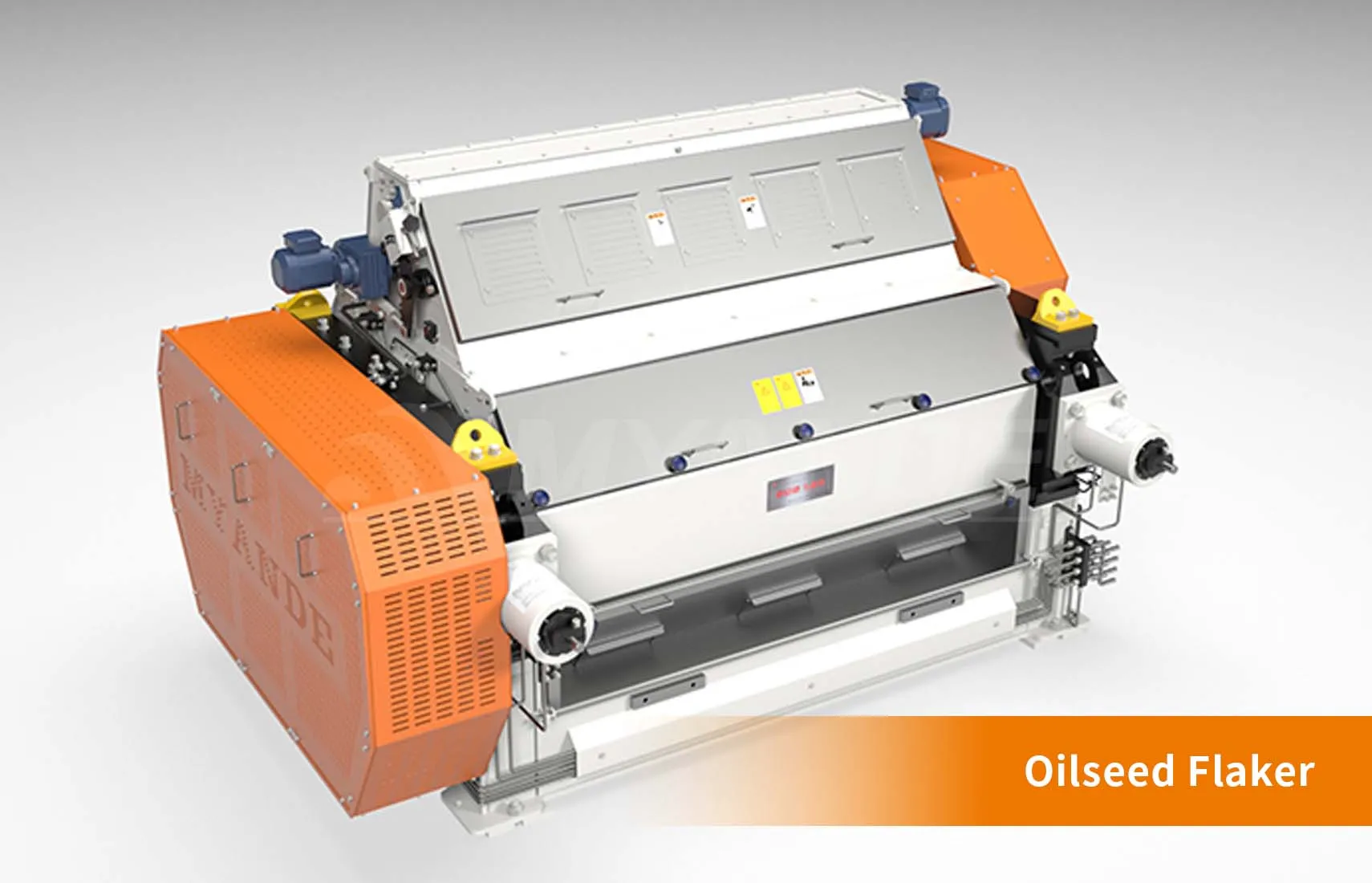
This is one of the most important stages in the entire preparation line.
At this point, the beans are already conditioned and dehulled, so they go into flaking mills.
What I always emphasize here is surface area. We compress the kernels into thin flakes, typically around 0.30–0.35 mm thickness, based on the process design standards of Myande Group.
Why this matters:
🔸It breaks oil cell structure
🔸It increases solvent penetration
🔸It creates a uniform bed for extraction
During flaking, moisture is released, so we also use airflow and cyclones to manage fines and keep the environment stable.
After this stage, the flakes are ready for extraction—or for the next optional step.
Step 5: Expanding (Optional Step)
Not every plant uses expansion, but when it is included, it significantly improves performance.
Expanded flakes go through a controlled structural modification process that:
🔸Opens up internal pore structure
🔸Improves solvent penetration
🔸Enhances oil yield efficiency
🔸Helps deactivate some anti-nutritional factors
After expansion, the material is dried and cooled before moving to extraction or pressing.
In my experience, this step is especially useful for large-scale, high-efficiency plants where every percentage of yield matters.
A well-designed soybean preparation system should be viewed as a continuous and interconnected process, where each stage directly influences the next. Effective conditioning supports smoother and more efficient cracking, proper dehulling ensures cleaner material for flaking, and uniform flaking ultimately contributes to a more stable and higher-yield extraction process.
In this sense, every step plays a critical role in determining overall plant performance. Therefore, soybean preparation should not be rushed, as it is the stage where extraction efficiency and final oil yield are truly defined.
You might also find these articles helpful:
1. How Soybean Oil Extraction Works: Step-by-Step Guide to Choose the Right Extract Methods
2. How to Produce High-Quality Soybean Oil?: Step-by-Step Refining Process Guide
3. How to Choose the Right Soybean Oil Plant with Your Capacity?
Frequently Asked Questions (FAQs)
1. Why is soybean preparation important before oil extraction?
Proper soybean preparation maximizes oil yield, improves extraction efficiency, and protects downstream equipment. It ensures the beans are cleaned, conditioned, cracked, flaked, and optionally expanded for optimal processing.
2. Can soybean hulls be reused in meal production?
Yes. Ground hulls can be reintroduced into the soybean meal to adjust protein content based on market demand, optimizing product quality and economic value. Read more> (link to hull production solution page)
3. Does Myande provide turnkey solutions?
Yes. Myande offers complete turnkey solutions, including plant design, equipment supply, installation, commissioning, and training for operators.
4. What makes Myande’s soybean preparation plants stand out?
🔸High automation for consistent quality and efficiency
🔸Scalable capacity to accommodate future growth
🔸Reliable equipment that protects downstream extraction and refining units
🔸Turnkey solutions with operator training and technical support
5. Does Myande support after-sales services?
Yes. Myande provides installation support, operator training, maintenance, spare parts supply, and technical consultation to ensure long-term plant performance.


Recent Posts

October 26, 2016
The Most Successful Engineering Contractor





Contact Us
Product Information
Quantity
Unit
Piece
Support order samples, customization, wholesale direct, and complete payment. If the product you look for does not have corresponding customized content, pls fill out the form below to contact us, and we will reply ASAP.